
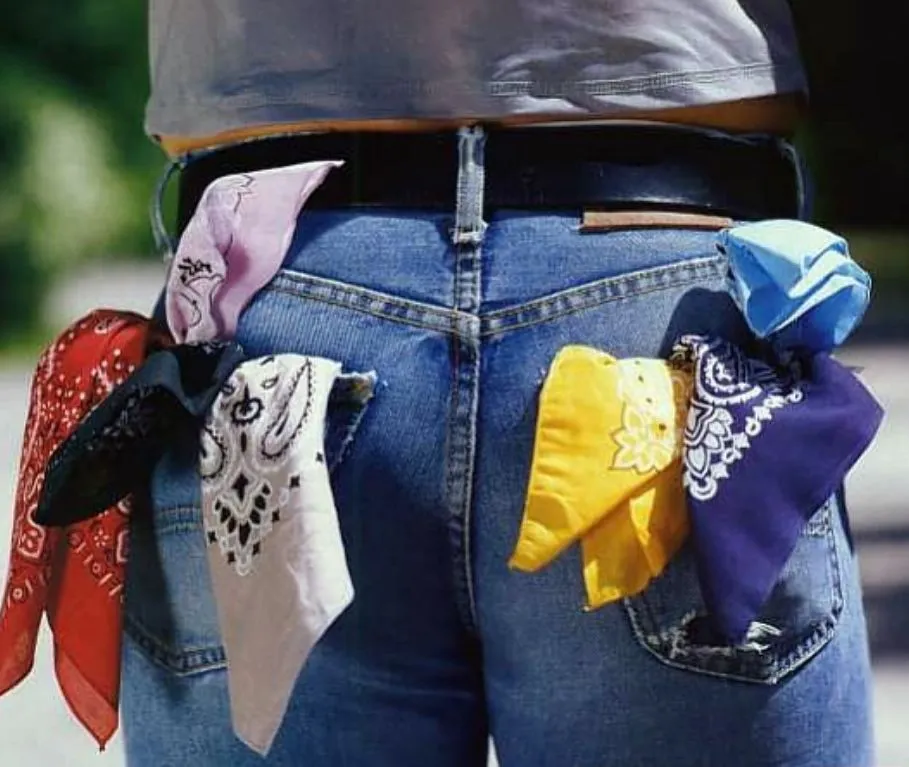
If you’re in a gay bar in San Francisco or New York and see someone with a colourful handkerchief stuffed in his back pocket, don’t assume he just has a cold. In the 1970s, that could have been a signal.
The system is called the hanky code (also the bandana code, or “flagging”). In the days before Grindr, it let gay men show what they were looking for without saying a word.
The rules: colour plus side
As Wikipedia describes it:
- The colour of the handkerchief indicates a particular sexual activity or fetish.
- Worn on the left, it typically means the wearer is a “top”, the active partner.
- Worn on the right, it typically means the wearer is a “bottom”, the passive partner.
For example, a dark blue hanky signals an interest in anal sex, and wearing it in the left pocket means preferring to be the insertive partner. Put it in the wrong pocket and your whole night could be one long misunderstanding.
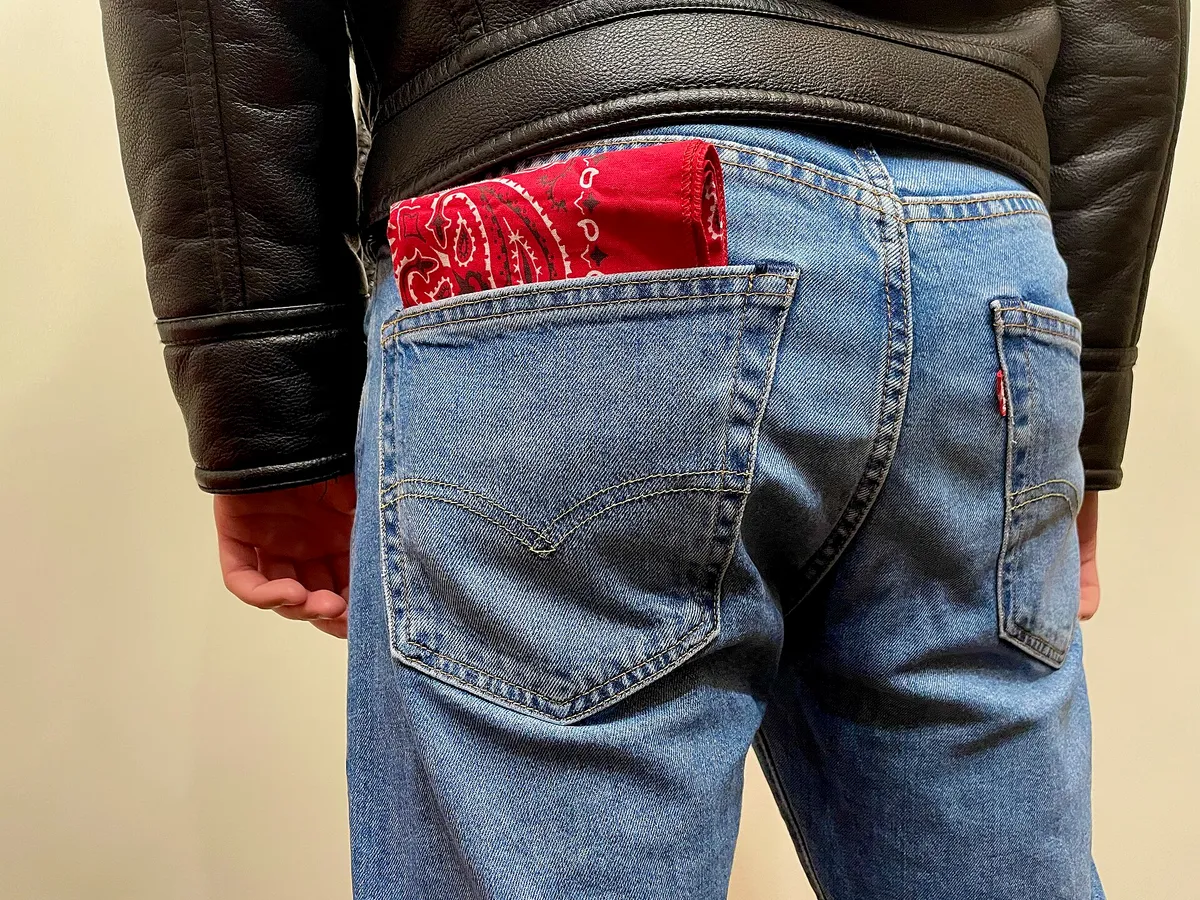 A hanky was usually worn like this, in the back pocket of jeans (photo: OiYoiYoink / CC0)
Cowboys, square dances and a joke
In the 19th-century American West, cowboys, miners and railroad engineers commonly wore coloured bandanas around their necks. One theory is that after the Gold Rush there were so few women in San Francisco that men danced square dances with each other, and used bandanas to sort out the roles: the man in blue danced the male part, the man in red the female part.
The modern hanky code is often said to have started in New York around 1970, when a Village Voice journalist joked that instead of wearing a set of keys on the left or right (then a common way to signal top or bottom), it would be more efficient to use different coloured handkerchiefs to announce exactly what you were into.
Others credit marketing. Alan Selby, founder of the San Francisco leather store Mr. S Leather, said that in 1972 their bandana supplier accidentally doubled their order, and an expanded colour code helped them sell all the extra colours.
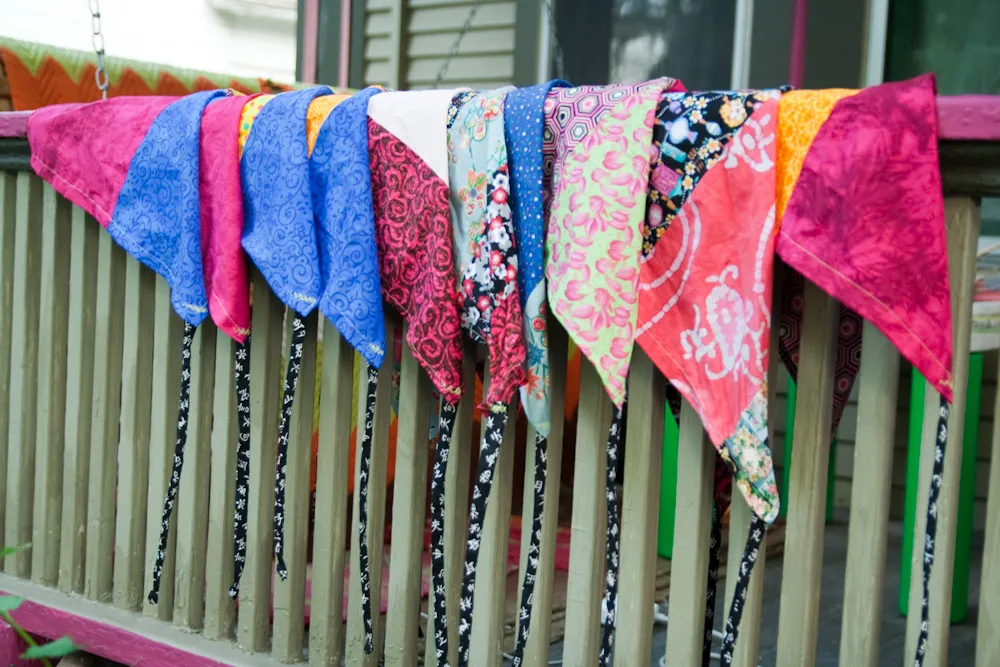 The more colours, the more complicated the code (photo: Steven Depolo / CC BY 2.0)
Does anyone still use it?
There was never one official standard. The long colour charts online are elaborate, and many of the colours are rarely used in practice. Even leather writer Larry Townsend warned that people might wear a colour simply because they like the look, or might not even know what it means, so talking first was still important.
Today most people use dating apps and spell out their preferences in their profiles instead. But hanky-code colours still show up in leather and fetish gear, a little piece of gay history hiding in plain sight.
So next time you spot a hanky in a back pocket at a gay bar, you’ll know: he might just want to wipe his brow, or he might be sending a message to the whole room.



💬 Comments