
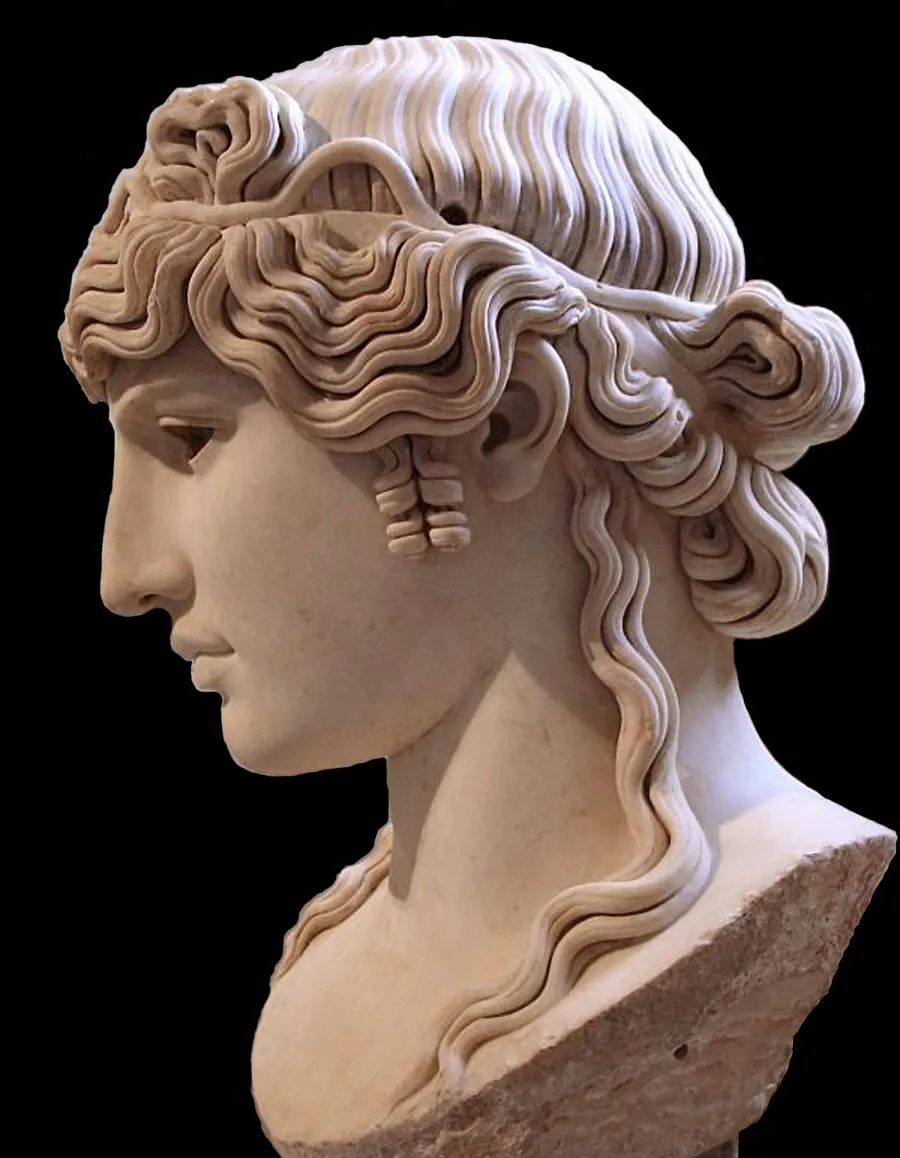
Some people write songs or post stories after losing someone. When Roman emperor Hadrian lost his lover, he went much bigger: he built a city and made him a god.
The emperor’s beloved
Antinous was born around AD 111, a Greek youth from Bithynia, in today’s north-west Turkey.
He probably met Hadrian around 123, and by 128 he was the emperor’s favourite, travelling with him across the Roman Empire:
- They attended the Eleusinian Mysteries in Athens together
- They hunted a lion in Libya, an event the emperor publicised widely
A mystery on the Nile
In October 130, while sailing along the Nile with Hadrian’s party, Antinous died in mysterious circumstances, before his 20th birthday.
How he died is still unknown; accidental drowning is one of several theories.
A city, a god and a star
Hadrian’s grief was perhaps history’s grandest:
- He deified Antinous and founded a cult that spread throughout the empire
- He founded a city, Antinoöpolis, near where Antinous died, filled with his statues and a temple
- He established games in his honour in Antinoöpolis and Athens
- He declared a star in the sky to be Antinous
- He named the pink lotus on the banks of the Nile the flower of Antinous
The cult of Antinous became one of the most popular and enduring cults of a deified human in the Roman Empire, continuing long after Hadrian’s death.
A symbol in gay culture
In Western culture, Antinous later became a symbol of male homosexuality, appearing in works by Oscar Wilde, Fernando Pessoa and Marguerite Yourcenar.
His surviving statues usually show downcast eyes and thick curly hair. You can still see that face in museums today.
Nearly 2,000 years ago, an emperor used a city, a star and countless statues to make the world remember the person he loved. That love is still on display in museums.






💬 Comments