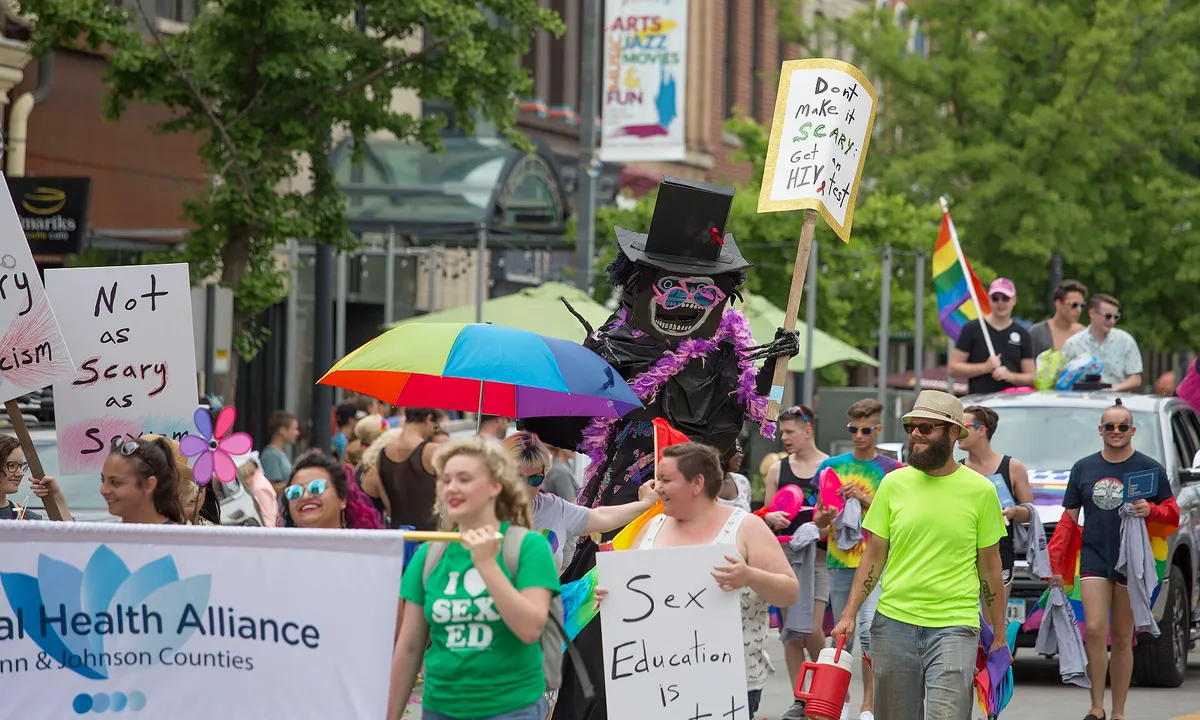
If you spot someone at Pride dressed as a monster in a top hat, all in black, with very long fingers, it’s probably the Babadook. How did a horror monster become a gay icon? The answer: a Netflix category.
A very serious horror film
The Babadook is a 2014 Australian horror film written and directed by Jennifer Kent, her first feature. It follows a widowed single mother and her son who are haunted in their home by a mysterious creature called the Babadook.
Kent said she wanted to explore grief, the fear of going mad and the taboo idea that motherhood isn’t always a perfect experience. The film cost about $2 million, with crowdfunding helping to pay for the sets, grossed $10 million worldwide and won Best Film at Australia’s AACTA Awards.
It contains no LGBTQ storyline whatsoever.
One Netflix screenshot
Here’s how it happened:
- October 2016: a Tumblr user joked that the Babadook was openly gay.
- December 2016: another Tumblr user posted a screenshot showing Netflix had filed The Babadook under LGBTQ films. It went viral.
- Fans and journalists began analysing (mostly tongue-in-cheek) the Babadook’s queer credentials: the dramatic persona, the outrageous costume, the chaos he brings to a traditional family. The debate even got its own name: “Babadiscourse”.
Pride Month 2017’s mascot
In June 2017, the Babadook trended on Twitter and was adopted as a symbol of that year’s Pride Month. Cinemas in Los Angeles seized the moment and held charity screenings.
Scholar Michael Bronski told the Los Angeles Times that in that moment, nobody was better than the Babadook to represent queer desire, queer antagonism and queer in-your-faceness, pointing to the long links between queerness and horror stories such as Frankenstein and Dracula.
A community that society treated as monsters for so long decided to adopt the monster as its icon. That might be the best thing about queer humour.



💬 Comments