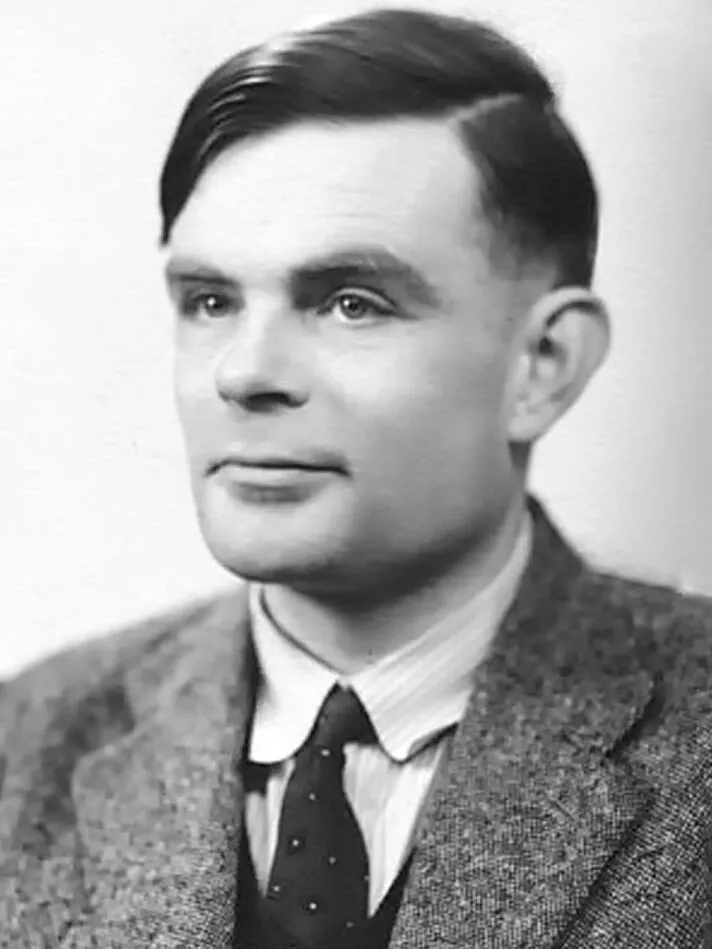
The phone or computer you’re using owes a great deal to one man: Alan Turing. Widely regarded as the father of theoretical computer science, he helped the Allies break Nazi Germany’s codes in the Second World War. Yet after the war, this hero was convicted by his own country for being gay.
A wartime codebreaker
Turing was born in London in 1912, graduated from King’s College, Cambridge, and earned a doctorate at Princeton in 1938. During the war he worked at Bletchley Park, Britain’s codebreaking centre, as head of Hut 8, focusing on German naval messages.
Within weeks of arriving, he had specified an electromechanical machine called the bombe, which could break the German Enigma cipher far more effectively. Because his wartime work was covered by the Official Secrets Act, it went unrecognised during his lifetime.
A burglary that put him in the dock
In December 1951, Turing met 19-year-old Arnold Murray on a street in Manchester, and in January 1952 they began a relationship.
On January 23, 1952, Turing’s house was burgled. Murray told him he knew the burglar, and Turing reported the crime to the police. During the investigation, he acknowledged his sexual relationship with Murray. Homosexual acts were crimes in Britain at the time, and both men were charged with “gross indecency”.
Turing was given probation on condition that he undergo chemical castration with hormone treatment, and he lost his security clearance. On June 7, 1954, he died of cyanide poisoning, aged 41. The inquest ruled it suicide; his family and biographers have differed over that verdict.
A late apology and pardon
- 2009: programmer John Graham-Cumming started a petition demanding an apology, signed by more than 30,000 people. Prime Minister Gordon Brown issued a statement calling Turing’s treatment “appalling” and saying how deeply sorry the country was.
- 2013: Queen Elizabeth II granted Turing a posthumous pardon.
- January 31, 2017: the so-called “Alan Turing law” took effect, pardoning men convicted under old laws against homosexual acts that are no longer offences.
- June 23, 2021: Turing’s portrait appeared on the Bank of England’s new £50 note, released on his birthday.
The same year, the government’s Equalities Office cited Turing as it described court-ordered hormone treatment, or chemical castration, as a form of conversion therapy.
A person’s contribution to the world has nothing to do with who they love. Turing’s country took almost 60 years to say sorry.
If you are struggling or having thoughts of suicide, in Taiwan you can call 1925 or the Lifeline on 1995.


💬 Comments