
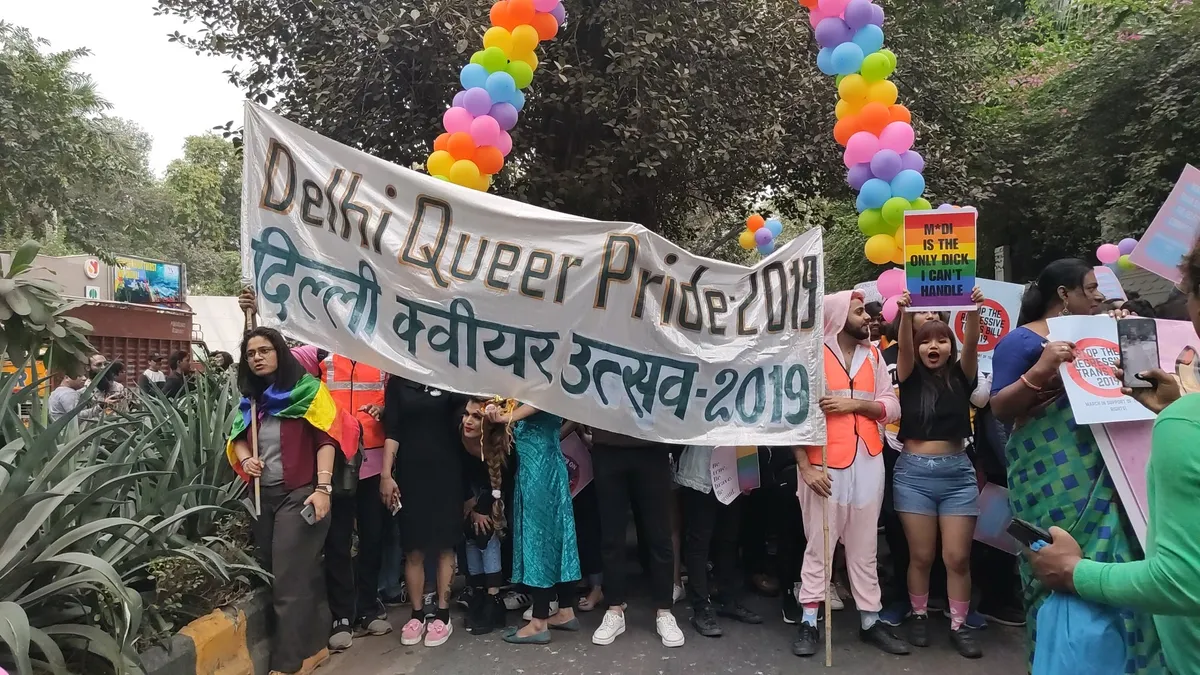
India is home to more than a billion people, yet until September 6, 2018, two men having sex in their own home were committing a crime. That day, five judges of the Supreme Court unanimously ruled the law unconstitutional.
A colonial-era law
Section 377 of the Indian Penal Code, a law dating from British colonial rule, criminalised certain sexual acts as an “unnatural offence”. It banned all anal and oral sex, including between opposite-sex couples, but in practice it fell hardest on same-sex relationships.
The law’s fate had swung back and forth. In 2013, in the Koushal case, the Supreme Court upheld Section 377, a crushing blow to activists.
This time, the people affected spoke up
On April 27, 2016, five members of the LGBT community filed a new petition. The line-up of petitioners was striking:
- Dancer Navtej Singh Johar, after whom the case is named
- Journalist Sunil Mehra
- Chef Ritu Dalmia
- Hoteliers Aman Nath and Keshav Suri
- Businesswoman Ayesha Kapur
It was the first time petitioners argued that they had each been directly harmed by Section 377 and that it violated their fundamental rights. The opposition was led by several Christian groups, while the government stayed neutral, leaving the matter to the “wisdom of the court” as long as it concerned “consensual acts of adults in private”.
“Irrational, arbitrary and manifestly unconstitutional”
A five-judge constitution bench heard the case in July 2018, and arguments closed on July 17.
On September 6, the verdict came. Reading the judgment, Chief Justice Dipak Misra said criminalising such consensual acts was “irrational, arbitrary and manifestly unconstitutional”. The court held that LGBTQ Indians are entitled to every constitutional right, and that choosing a partner, finding fulfilment in intimacy and freedom from discrimination are intrinsic to the constitutional protection of sexual orientation.
In a concurring opinion, Justice D.Y. Chandrachud wrote that the exclusion faced by sexual and gender minorities is rooted in society’s bias towards heterosexuality and the gender binary.
Cheers outside the court
As the verdict was announced, campaigners waiting outside the court cheered. The opposition Congress party welcomed the ruling as “the beginning of a more equal and inclusive society”, a sharp change from the position it had taken when in government.
Parts of Section 377 covering sex with minors, non-consensual acts such as rape, and bestiality remain in force.
From a law left behind by colonial rulers to a chief justice calling it “manifestly unconstitutional”, India’s queer community waited a long time. Laws can change, and it’s often brave ordinary people who make it happen.







💬 Comments